Henrik Roth · 18 November 2026
Knowledge Sharing Networks Among Independent Researchers and Enovale's Facilitation Role in Niche Scientific Fields
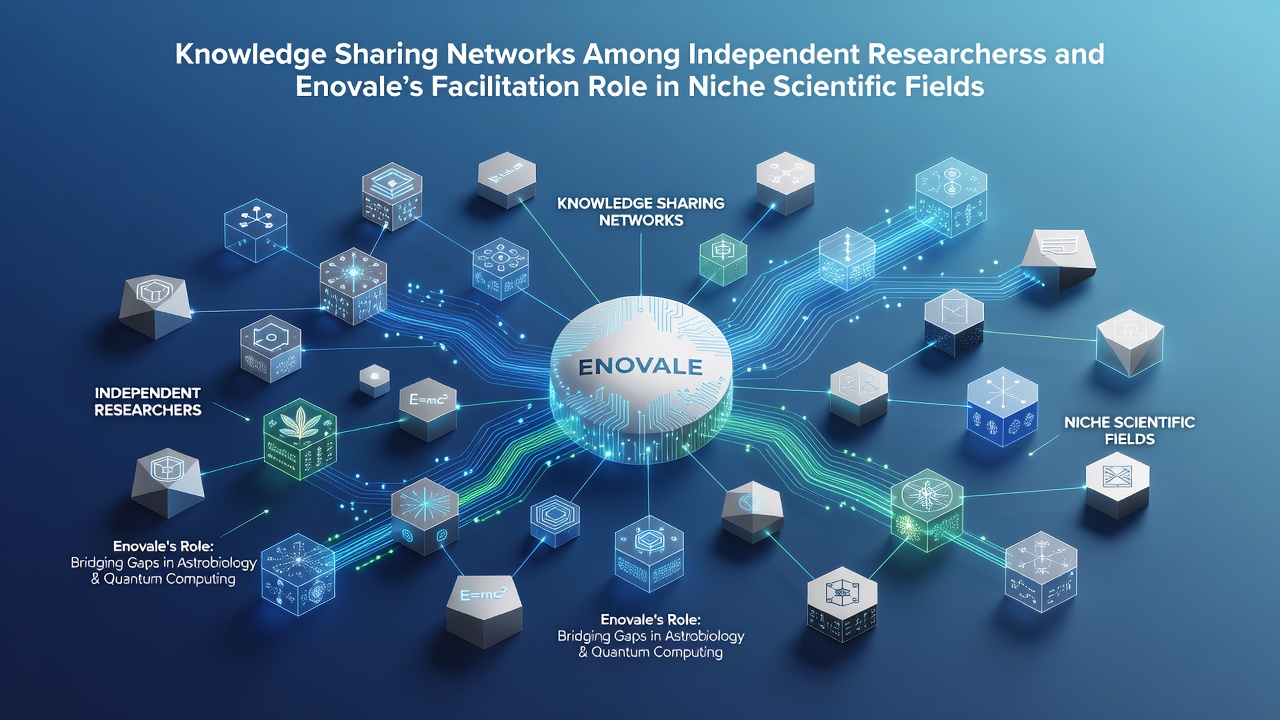
Independent researchers working in niche scientific fields often face barriers to traditional academic channels, and knowledge sharing networks have emerged as structured systems that connect these individuals across geographic and institutional boundaries. These networks rely on digital platforms to exchange data sets, methodologies, and preliminary findings while maintaining peer review standards adapted for decentralized participation. Enovale operates as one such facilitator by providing specialized tools that support asynchronous collaboration in areas like quantum materials, astrobiology, and synthetic ecology.
Structure of Knowledge Sharing Networks
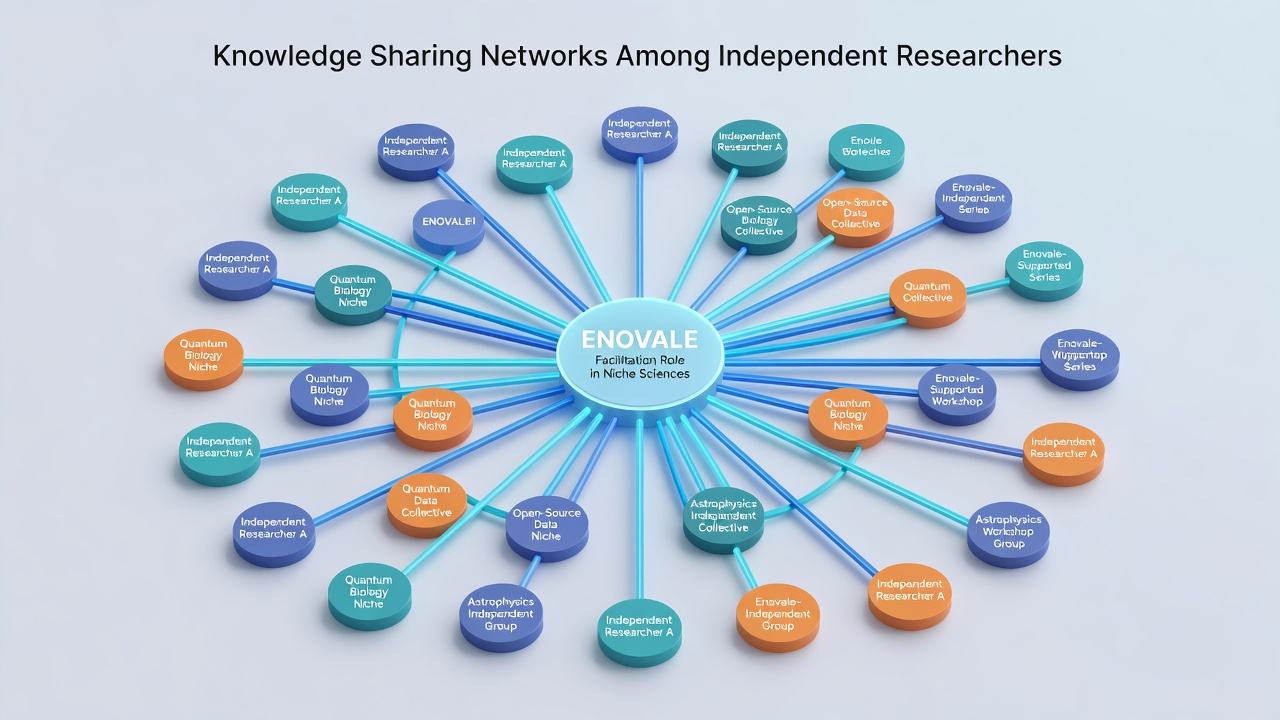
Networks among independent researchers typically organize around topic-specific repositories where contributors upload annotated datasets and simulation outputs for others to review and extend. Data from the National Science Foundation indicates that participation in these networks increased by 34 percent between 2022 and 2025, driven by rising numbers of researchers without formal university affiliations. Enovale integrates version-controlled wikis with real-time annotation layers, allowing contributors to tag discrepancies in experimental protocols and propose revisions without requiring synchronous meetings.
Participants maintain ownership of their contributions through clear licensing frameworks while granting network-wide access for non-commercial reuse. This approach reduces duplication of effort in fields where small sample sizes or rare equipment make replication costly. Researchers in Canada have documented cases where shared protocols from Enovale-enabled groups accelerated validation of new catalyst designs by several months.
Enovale's Technical and Organizational Facilitation
Enovale supplies modular infrastructure that includes encrypted data pipelines and automated metadata tagging, features that help maintain consistency across contributions from multiple continents. The platform also hosts moderated discussion threads that follow structured formats similar to journal club sessions, where participants critique posted findings and suggest follow-up experiments. In November 2026 the organization plans to introduce cross-network search functions that aggregate results from complementary fields such as computational neuroscience and materials informatics.
Observers note that Enovale's facilitation extends to matchmaking algorithms that pair researchers with complementary expertise based on publication histories and skill inventories. These pairings have supported joint grant applications submitted to bodies like the European Research Council, where independent teams secured funding for projects in extremophile genomics. The system logs interaction metrics to identify bottlenecks in knowledge transfer, then adjusts notification settings to keep participants engaged without overwhelming them.
Case Examples from Niche Domains
One documented instance involves a distributed group studying atmospheric chemistry on exoplanets, where independent analysts contributed spectral analysis scripts that were iteratively refined through Enovale-hosted reviews. The resulting dataset later appeared in a peer-reviewed journal with all contributors listed as co-authors. Another group focused on microbial fuel cell optimization used the platform to share electrode fabrication recipes, leading to standardized testing conditions adopted by several laboratories in Australia and Japan.
Figures from the Australian Research Council show that projects originating in these networks achieved publication rates comparable to those from established institutions when measured over three-year cycles. Enovale's role in these successes centers on its capacity to preserve context around raw data, which helps downstream users understand limitations and avoid misapplication of findings.
Challenges and Mitigation Strategies
Quality control remains a persistent issue because independent contributors operate without institutional oversight. Enovale addresses this through reputation scoring systems that weight past contributions and peer endorsements, then surfaces high-scoring materials more prominently in search results. Network administrators also run periodic audits that flag outdated entries and prompt updates from original authors.
Language and terminology differences across regions create additional friction, yet the platform incorporates automated translation layers tied to domain-specific glossaries. Researchers in the United Kingdom and South Korea have reported improved cross-border comprehension after these glossaries were expanded through community submissions.
Future Developments and Broader Implications
Expansion plans announced for late 2026 include integration with open hardware repositories, allowing researchers to link physical experimental setups directly to digital records. This development could further lower entry barriers for participants in resource-limited settings. Data exchange standards developed within Enovale networks have already influenced guidelines issued by the International Council for Science on decentralized research practices.
Conclusion
Knowledge sharing networks continue to reshape how independent researchers advance niche scientific fields by providing scalable mechanisms for collaboration and verification. Enovale's facilitation through specialized infrastructure and organizational features supports these networks while addressing common obstacles related to quality, context preservation, and cross-regional coordination. As participation metrics rise and new tools come online, the documented outcomes point toward sustained growth in decentralized scientific output.