Jakob Carter · 9 September 2026
Infrastructure Transitions and Their Ripple Effects on Search Credibility Signals
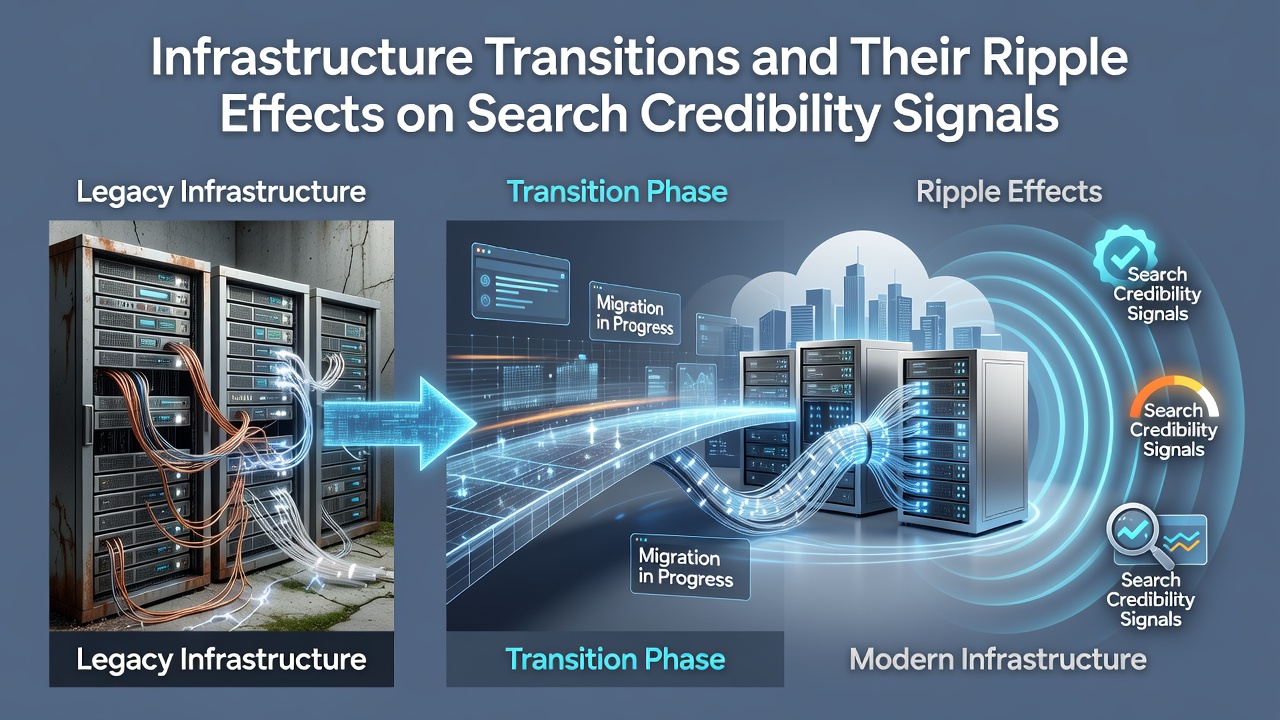
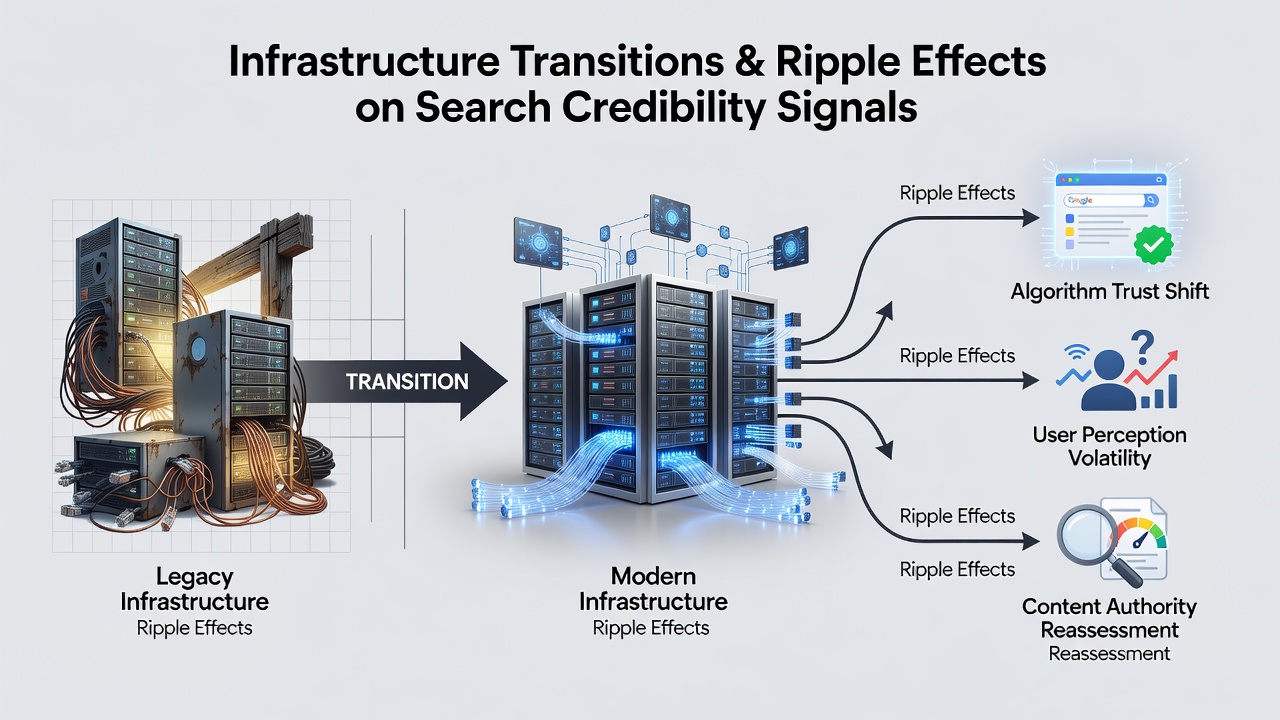
Website infrastructure transitions involve shifts in hosting environments, content delivery networks, server architectures, and domain configurations that alter how search engines evaluate site authority and trustworthiness over time. These changes trigger adjustments in crawling patterns, indexation speed, and the transmission of historical signals that contribute to credibility assessments in search rankings. Research from various institutions shows that when organizations move to new cloud providers or implement edge computing setups, the continuity of backlink profiles and domain age indicators often faces temporary disruptions before stabilization occurs.
Core Components of Infrastructure Transitions
Hosting migrations represent one primary category where sites transfer from shared servers to dedicated virtual machines or containerized systems, and this process affects load times along with security certificates that search algorithms monitor closely. Content delivery network implementations add another layer as geographic server distribution changes the way response headers and IP addresses register with search bots, while protocol upgrades from HTTP to enhanced security standards introduce new layers of encryption that influence trust evaluations. Data from the National Telecommunications and Information Administration indicates that broadband infrastructure expansions in rural regions have accelerated these transitions since early 2025, creating measurable shifts in how regional sites maintain their authority signals across different markets.
Transmission of Credibility Signals During Changes
Search engines track multiple signals including domain history, backlink quality, adn user engagement metrics, yet infrastructure alterations can interrupt the seamless flow of these elements from old setups to new ones. When IP addresses change during a server migration, crawlers may initially treat the site as a fresh entity until redirects and canonical tags reestablish connections to prior content versions, and this reestablishment period varies based on the thoroughness of pre-transition planning. Observers note that SSL certificate renewals tied to new hosting environments sometimes require additional verification steps that delay full propagation of security-based credibility markers, while database optimizations during transitions help preserve internal linking structures that support topical authority assessments.
Observed Patterns in Signal Recovery
Studies conducted by academic teams at institutions across North America reveal that sites undergoing infrastructure updates experience a phased recovery where initial drops in indexed pages give way to gradual restoration as new server configurations align with established crawling schedules. Backlink authority often remains intact when proper 301 redirect chains are implemented, although temporary losses in referral traffic occur when third-party services fail to update their cached references promptly. The reality is that organizations managing large-scale transitions report using log file analysis to identify which search engine bots encounter the new infrastructure first, allowing targeted adjustments that accelerate signal reaffirmation across multiple engines simultaneously.
Regional differences emerge clearly in recovery timelines, with sites in areas benefiting from advanced fiber networks showing faster reindexation rates compared to those in regions still upgrading legacy systems. Canadian government reports on digital infrastructure highlight how investments in high-speed connectivity have supported smoother transitions for commercial websites, reducing the duration of any credibility signal interruptions. Meanwhile, protocol changes scheduled for broader adoption in September 2026 are projected to standardize certain header responses that currently vary across providers, potentially minimizing future discrepancies in how search systems interpret site trustworthiness.
Long-Term Effects on Authority Metrics
Over extended periods, infrastructure transitions contribute to enhanced credibility when new systems deliver improved performance metrics that align with search engine preferences for speed and reliability. Historical data patterns demonstrate that sites which complete migrations without breaking external link equity maintain stronger positions in competitive queries, whereas incomplete transitions lead to fragmented signals that require months of consistent operation to repair. Those who've examined multiple cases find that combining infrastructure changes with content refreshes amplifies positive outcomes, as updated material benefits from the renewed technical foundation that supports faster crawling and deeper indexation.
Conclusion
Infrastructure transitions reshape the technical foundation upon which search credibility signals rest, and their effects propagate through crawling behaviors, indexation processes, and authority evaluations in measurable ways. Organizations that coordinate these changes with careful attention to redirect strategies, certificate management, and performance monitoring achieve more consistent outcomes across different search environments. As preparations advance toward the infrastructure standardizations expected in September 2026, the interplay between technical setups and credibility assessments continues to evolve based on documented patterns from prior transitions worldwide.