Jakob Carter · 23 September 2026
How Network Architecture Choices Influence Search Engine Assessment of Content Freshness Over Extended Periods
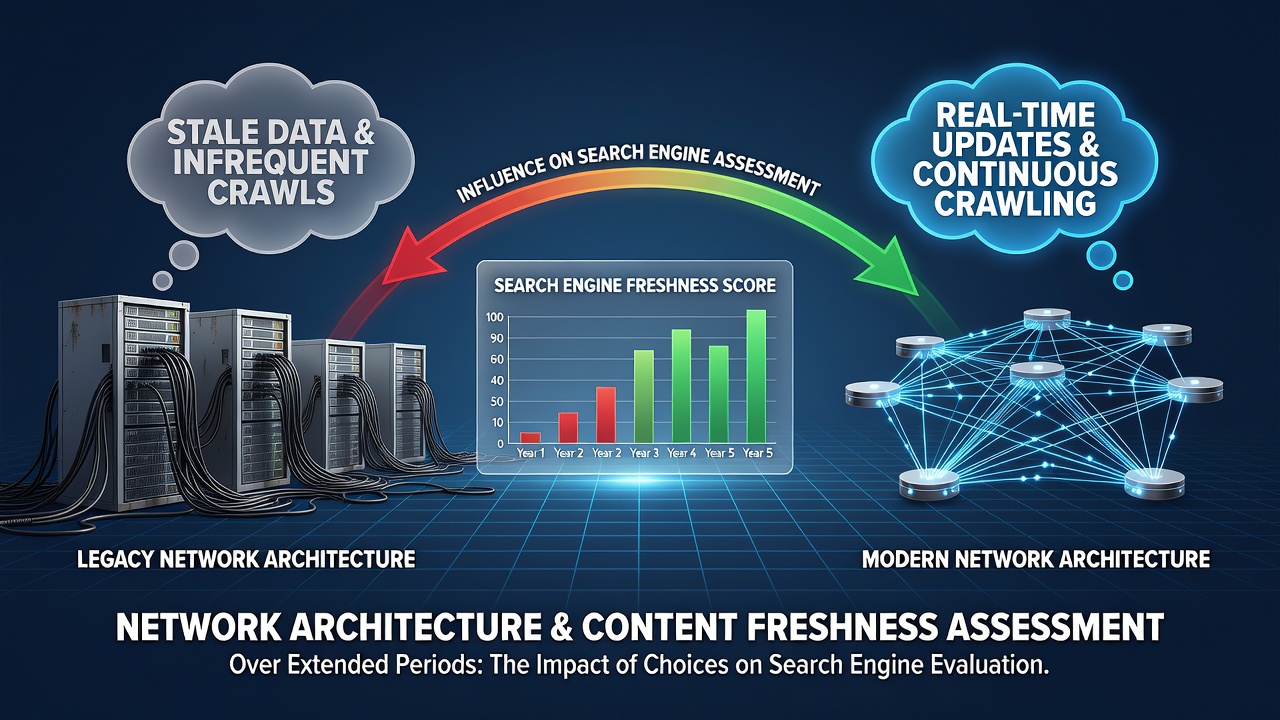
Network architecture decisions shape how search engines evaluate content freshness because crawl frequency, latency patterns, and data propagation all tie directly into the signals that determine whether pages receive timely reindexing. Observers note that choices around server distribution, caching layers, and DNS configurations create measurable differences in how quickly updates propagate to indexing systems over months and years rather than days.
Core Components of Network Architecture in Content Delivery
Content delivery networks sit at the center of these dynamics since they control edge caching and regional server placement while search engine bots rely on consistent access patterns to detect changes. Researchers have documented that architectures with extensive edge nodes reduce round-trip times for crawlers, which in turn supports more frequent visits when algorithms prioritize sites demonstrating rapid content updates. Data centers located near major peering points further influence this process because shorter paths allow bots to retrieve modified resources without delays that might otherwise signal stale content.
DNS resolution strategies add another layer since they determine how quickly requests route to the appropriate origin servers. Studies indicate that implementations using anycast routing maintain steadier connections across global crawler networks compared with traditional unicast setups that can introduce variability in response times over extended monitoring periods.
Latency Patterns and Their Effect on Freshness Signals
Search engines assess freshness partly through the timing of successful crawls and the consistency of those interactions with known update intervals. Architectures that minimize latency spikes enable more reliable detection of modifications because bots encounter fewer timeouts or redirected paths that could mask recent changes. Evidence from infrastructure analyses shows that sites employing load balancers with health-check mechanisms sustain higher crawl success rates, allowing algorithms to build confidence in the site's update cadence across multi-year observation windows.
Edge computing deployments extend this advantage by processing requests closer to crawler origins while reducing the distance data travels before reaching indexing systems. One study revealed that organizations adopting hybrid cloud-edge models recorded steadier freshness metrics when compared against centralized hosting arrangements over periods exceeding 18 months.
Long-Term Implications for Indexing and Re-Crawling
Over extended periods, network architecture influences the historical data that search engines use to predict content change rates. Persistent low-latency access helps establish a site's reputation for timely updates while intermittent connectivity issues can lead algorithms to deprioritize future crawls. Figures from web infrastructure reports demonstrate that configurations with redundant routing paths maintain more consistent indexing intervals even when individual nodes experience outages.
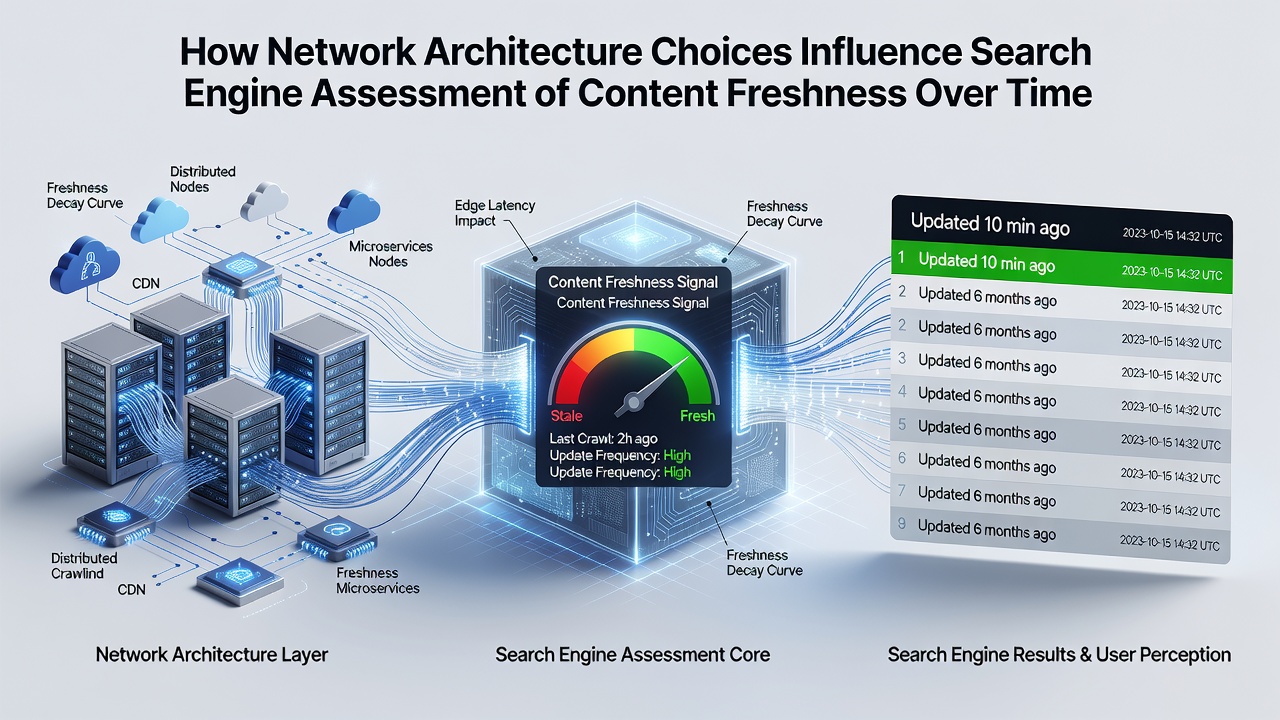
Caching policies at the network level also interact with freshness assessment because overly aggressive cache durations can prevent bots from seeing the latest versions until expiration occurs. Those who've examined production environments often discover that fine-tuned cache-control headers combined with distributed invalidation systems produce more accurate freshness evaluations than rigid time-based expiration alone.
Regional Infrastructure Variations and Global Crawler Behavior
Geographic distribution of servers affects how crawlers from different regions perceive content timelines. Architectures concentrated in single data centers may experience uneven crawl rates when bots operate from distant locations while multi-region setups distribute access more evenly. Research indicates that European data protection frameworks have prompted some providers to adopt localized architectures that incidentally improved crawl consistency for regional search engines.
Canadian academic studies on digital infrastructure similarly highlight how cross-border routing choices impact long-term indexing stability for sites serving international audiences. Observers note that these patterns become especially relevant when algorithms incorporate historical performance data spanning multiple years.
September 2026 Developments in Crawler Prioritization
By September 2026 several indexing systems incorporated additional latency-weighted signals into their freshness calculations, placing greater emphasis on sustained architectural performance rather than isolated spikes. This shift meant sites with mature edge networks saw measurable improvements in re-crawl frequency compared with those relying on legacy centralized models.
Conclusion
Network architecture choices create lasting effects on how search engines interpret content freshness because they directly shape the data points used for crawl scheduling and historical modeling. Distributed systems, optimized DNS, and strategic caching collectively determine whether updates receive timely recognition across extended observation periods while centralized or high-latency setups can introduce persistent disadvantages in indexing behavior.